Commercial Auto Insurance for Sealcoating Spray Trucks and Tankers
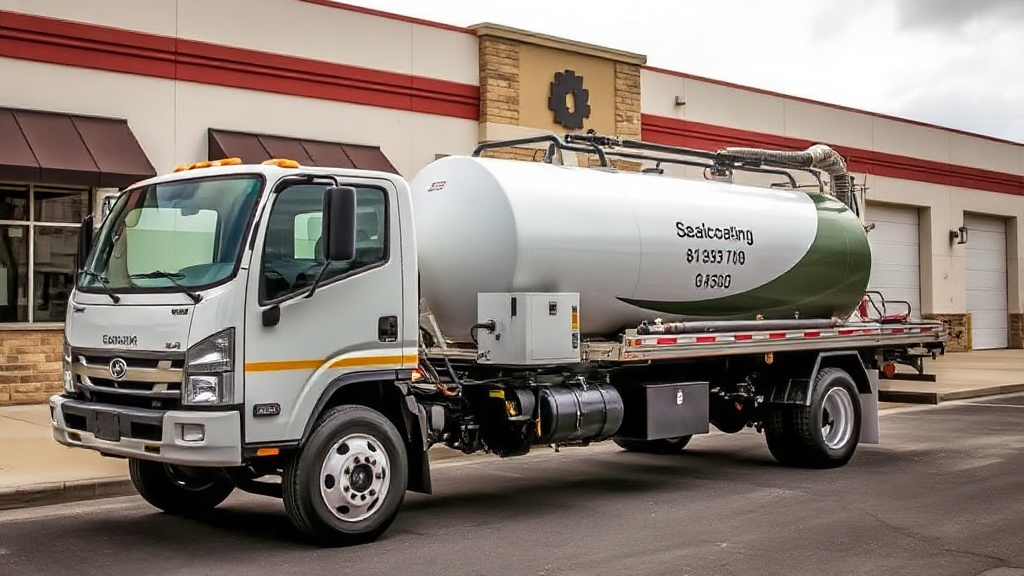
If you're running a sealcoating operation with a spray truck, crack fill truck, or tanker hauling sealer material on public roads, you need commercial auto insurance. Not personal auto with a business endorsement. Not a farm vehicle policy. Commercial auto — written specifically for vehicles used in the conduct of your sealcoating business.
This matters more than most contractors realize until they're in an accident and the personal auto carrier denies the claim because the vehicle was being used for commercial purposes.
Why Personal Auto Doesn't Cover Your Spray Truck
Personal auto insurance policies contain exclusions for commercial use. The exact language varies by carrier, but the core principle is consistent: if you're using a vehicle to generate income — hauling equipment to job sites, transporting materials, driving to and from commercial accounts — a personal auto policy excludes that use.
Carriers take this seriously. When an accident happens, they investigate. If your truck was on the way to a sealcoating job, loaded with equipment, and you had only personal auto coverage, the denial letter comes fast.
The consequences are significant: you're personally liable for the accident without insurance backing. For a serious accident with injuries, that's a financial exposure most contractors can't absorb.
Commercial auto isn't just protection — it's what makes your operation legal and fully covered for the vehicles you actually use to run the business.
What Commercial Auto Covers for Sealcoating Contractors
A commercial auto policy for a sealcoating contractor covers:
Liability. If you're at fault in an accident and cause injury or property damage to others, liability coverage pays for the other party's medical bills, vehicle repair, and legal costs up to your policy limits.
Physical damage. Collision covers damage to your own vehicle from an accident; comprehensive covers fire, theft, vandalism, weather, and other non-collision events. This is what pays to repair or replace your spray truck if it's damaged.
Hired and non-owned auto. If your crew members drive their own personal vehicles to job sites, or if you rent vehicles for business use, hired and non-owned auto covers your liability exposure for those vehicles. Without it, your business can be held liable for accidents in vehicles you don't own.
Uninsured/underinsured motorist. Covers your losses when the at-fault party in an accident doesn't have enough insurance to pay for the damages.
The Spray System Is Not Covered by Auto
Here's the critical coverage distinction every sealcoating contractor needs to understand: commercial auto covers the vehicle. It does not cover the spray system, tank, crack fill equipment, or any other tools and equipment installed in or on the vehicle.
If your spray truck is rear-ended and the tank is destroyed, commercial auto pays for the truck. The tank — an $18,000 piece of production equipment — is covered by your tools and equipment or inland marine policy, not auto.
If the tank explodes or malfunctions, causing damage to the vehicle, that may not be an auto claim at all — it may be a tools and equipment claim.
This isn't a technicality. It's the structure of how insurance is designed. The policies are meant to work together: commercial auto for the vehicle, tools and equipment (or inland marine) for what's in and on it. Both need to be in place, and both need to be structured correctly, so there's no gap at claim time.
DOT Requirements for Vehicles Hauling Sealcoating Materials
If your vehicles meet certain weight thresholds or you're hauling regulated materials, Department of Transportation (DOT) requirements may apply. This includes:
- Gross vehicle weight ratings above 10,001 pounds typically require DOT registration and compliance
- Vehicles transporting hazardous materials in reportable quantities trigger additional requirements
- Coal tar sealer, depending on classification and quantity, may have specific labeling and placard requirements
Your commercial auto policy needs to be structured to comply with applicable DOT requirements. If you're not sure what applies to your specific vehicles and operations, ask your agent to walk through the compliance requirements with you.
Fleet vs. Single-Vehicle Programs
If you run one or two trucks, a standard commercial auto policy covers each vehicle individually. As your fleet grows, fleet programs become more efficient — you insure the entire fleet under one policy, often with fleet discounts and simplified administration.
Fleet programs also handle vehicle additions more smoothly. When you buy a new spray truck or add a crack fill truck to the operation, adding it to a fleet policy is typically a straightforward endorsement rather than a new policy placement.
For sealcoating contractors growing their fleets, it's worth talking to your agent about at what point a fleet program makes sense relative to individual vehicle policies.
Hired and Non-Owned Auto — The Coverage Most Contractors Skip
Hired and non-owned auto (HNOA) is often overlooked by small sealcoating contractors, and that's a mistake.
If a crew member drives their personal pickup to a job site, runs an errand for the business, or uses their own vehicle to pick up materials, and they're in an accident — your business can be held liable. The crew member's personal auto insurance covers the vehicle, but it often doesn't cover business use, and even if it does, the limits may be insufficient.
HNOA coverage is typically inexpensive to add to a commercial auto policy and covers this liability exposure. For any sealcoating operation where crew members use their own vehicles on company business, it's a necessary addition.
What Happens When Your Loaded Spray Truck Is Rear-Ended?
This scenario illustrates why you need all three coverages working together:
Your spray truck is fully loaded — 500-gallon sealcoating tank, crack fill machine in the bed — and gets rear-ended at an intersection. The other driver is at fault.
- The other driver's liability insurance pays for damage to your truck (up to their limits)
- Your commercial auto's uninsured/underinsured motorist coverage picks up the gap if the other driver is underinsured
- Your collision coverage on your commercial auto policy can step in if you want your own carrier to handle the truck repair
- Your inland marine or tools and equipment policy covers the tank and crack fill equipment damaged in the bed
Without all of these in place, you're left holding some piece of the loss — and when a loaded spray truck is totaled, the total can be substantial.
Getting commercial auto right means coordinating it with your tools coverage and making sure your limits are adequate for the value of the vehicles and equipment your business depends on.
Need this coverage for your sealcoating business?
Get a real quote in about 15 minutes — we shop A-rated specialty contractor markets.